
Canada Related
Landing in Canada as a PR: My First-Weeks Guide for Toronto and the GTA
By Gopi · Last verified
Landing in Canada as a PR and settling in Toronto, Mississauga or anywhere in the GTA? This is what I’d do in the first weeks, based on our own move after we landed in 2019. Someone moving to Canada as a permanent resident wrote to me with a list of questions, the same ones every newcomer has, so I’m sharing my replies here. It’s only what worked for us. Prices, rents and plans change often, so always check current rates.
If you only do 5 things
- Buy health insurance for the OHIP gap before you fly. OHIP needs three documents, including proof of an Ontario address you won’t have on day one.
- Make your “goods to follow” list before you land. Anything you want to bring in duty-free later must be on the list you show at your first arrival.
- In your first days: SIM, bank account, SIN, in that order.
- Keep housing flexible with an Airbnb for the first two months, and don’t sign a lease until you have a job.
- Start networking before you land, and use the free settlement programs once you’re here.
Your first-weeks checklist
- 1. Health insurance bought for the OHIP gap
- 2. Goods to follow list ready (two copies)
- 3. Money plan: cash, forex card, any gift from parents
- 4. Prepaid SIM card
- 5. Bank account opened
- 6. SIN (Social Insurance Number)
- 7. OHIP applied for at ServiceOntario
- 8. Ontario driver's licence (within 60 days)
- 9. Applied for the CGEB and child benefits
- 10. Settlement program and networking started
Still to do
- Health insurance bought for the OHIP gap: OHIP needs proof of an Ontario address, which can take weeks. Buy private health insurance before you fly.
- Goods to follow list ready (two copies): Only items on the list you show at your first arrival can come in duty-free later. Make it before you land.
- Money plan: cash, forex card, any gift from parents: Declare C$10,000 or more at the border. If parents are gifting money, check India's LRS and TCS rules first.
- Prepaid SIM card: Get a prepaid plan from a mall, not the airport. No credit check, no ID needed.
- Bank account opened: You can open one with your CoPR. Compare newcomer packages before choosing.
- SIN (Social Insurance Number): At the airport if the Service Canada counter is open, online, or at a Service Canada Centre.
- OHIP applied for at ServiceOntario: Take three original documents: CoPR, Ontario address proof and identity.
- Ontario driver's licence (within 60 days): You can drive on your foreign licence for 60 days after becoming a resident, then you need an Ontario licence.
- Applied for the CGEB and child benefits: You can apply as soon as you arrive, before your first tax return.
- Settlement program and networking started: Free government-funded programs plus networking. Start before you land if you can.
You've covered the essentials. Welcome to Canada, and all the best with your move!
The first few months are the hardest part. Take it one step at a time.
Tick each step as you finish it. Your ticks stay on this device only.
This reflects my personal experience, not immigration advice. Confirm anything specific to your case with a licensed immigration consultant (RCIC) or lawyer. You can check an RCIC on the College of Immigration and Citizenship Consultants’ free public register before paying anyone for immigration advice.
Before you land
Health insurance and OHIP
Quick answer
There’s no longer a three-month wait for OHIP, but ServiceOntario needs three original documents, including proof of your Ontario address. In my case, that was a physical bank statement that took 15 to 45 days to arrive. Buy health insurance to cover that gap before you fly.

Read the full details
Ontario removed the three-month OHIP waiting period in March 2020, so permanent residents can apply as soon as they arrive. You apply in person at ServiceOntario with three original documents: one proving your immigration status (your CoPR works), one proving you live in Ontario, and one proving your identity (your passport usually works). Check the list of qualifying documents before you go, as it gets updated. Ontario also expects new residents to be physically present in Ontario for at least 153 of their first 183 days (Ontario OHIP registration guidance).
Address proof was the hard part for us. If you’re staying in an Airbnb, the invoice isn’t proof of address. In my case, ServiceOntario accepted a physical bank statement that came to the address where I lived, even though it was an Airbnb. I’ve seen physical statements arrive anywhere between 15 and 45 days, so you need medical coverage for that gap. Once we had it, ServiceOntario gave us temporary OHIP coverage within an hour, until the card arrived by mail.
Keep your address up to date for OHIP and your driver’s licence: use your temporary address for now and update it online, free, when you move.
Insurance for the gap: buying from India is cheaper, and I did that when I first landed. But I wouldn’t risk peace of mind when starting a new life. A Canadian insurer like Manulife, Sun Life or Canada Life costs more but is far smoother if you need hospital care. We bought Manulife insurance online for a family member who arrived as a PR, and we didn’t pay anything out of pocket when it was needed. Tell them you’re landing as a PR. For plain travel insurance, any insurer will do.
Packing
Quick answer
Pack light and smart: critical documents in your hand baggage, thermals instead of heavy coats, and small things that are expensive here. Buy your winter jacket and boots in Canada.
My full, customisable packing list is in things to carry to Canada.
Partner
Vacuum storage bags for travel (Amazon India)
Vacuum compression bags save a lot of suitcase space for clothes. This link opens Amazon India, handy to buy before you fly.
View on Amazon (affiliate link)
Read the full details
Think small: bring things that take little space but are expensive here (like an extra pair of glasses), plus a few sentimental items to make the place feel like home. Vacuum storage bags are a lifesaver for clothes.
- Hand baggage: passports, CoPR and job letters, always.
- Electronics: your laptop and phone. Canada runs on 110V, so skip anything that isn’t compatible.
- Medicines: your prescription meds (up to 90 days) and a toiletry kit for a month.
- Clothes: everyday tees and jeans, lightweight thermals for layering, and 2 or 3 festive outfits. Indian summer clothes work indoors because places are well heated.
- Kitchen: I’d bring a pressure cooker, and a mixer grinder only if you make masala at home (we did).
Carton boxes: I packed in carton boxes when we first came, and I still do. It got us 16 to 20 kg extra, and our mixer grinder arrived intact. We moved between Airbnbs and just re-taped the boxes each time. Label each box, list what’s inside and video the packing.
Winter clothes: don’t get influenced by influencers. Toronto’s winter is manageable when almost everything, including many bus stops, is heated. Learn layering. Apart from thermals, don’t buy winter wear in India; it often isn’t built for Canadian conditions. Costco has inexpensive caps, gloves, thermals and socks, and retail stores and outlet malls have jackets and boots. Check temperature ratings and discounts. If you arrive in October, it’s still fall and you’ll have time; arriving mid-November or December, buy a few things before you land.
-
 Play video: Packing in carton boxes for air travel
 Packing in carton boxes for air travel
-
 Play video: How to pack your suitcase for international travel
 How to pack your suitcase for international travel
Goods to follow and customs
Quick answer
Make your goods to follow list before you land. Anything you want to bring in duty-free later has to be on the list you show at your first arrival.
Read the full details
As a new permanent resident, you can bring your personal and household goods into Canada duty-free, as long as you owned, possessed and used them before you arrived, and you declare them at your first point of arrival on CBSA’s form BSF186, either as goods with you or as goods to follow. Prepare the list in duplicate, with make, model, serial number (where possible) and approximate value. Only items listed as goods to follow at that first arrival qualify duty-free later; there’s no deadline for them to arrive (CBSA memorandum D2-2-1).
I know people who didn’t make this list and ended up paying duty on things they genuinely owned, like iPads and MacBooks. So take the time before you land.
Extra baggage or shipping later? We came with 2 hand bags and 4 checked carton boxes, which kept us mobile while we didn’t know where we’d settle. Shipping later is often cheaper for heavy items, but factor in the wait. As long as items are on your goods to follow list, you won’t pay duty either way.
Once you’re a resident, trips abroad come with a separate personal exemption when you return, based on how long you were away. Check CBSA’s current limits before you travel.
Bringing money: INR to CAD
Quick answer
When we landed in 2019, we brought about $1,500 in cash and $7,000 on a forex card. If you bring C$10,000 or more, you must declare it at the border. If your parents plan to gift you money, know India’s ₹10 lakh TCS threshold, and redesignate your Indian savings account as NRO once you move.

Read the full details
What we did: about $1,500 in cash and $7,000 on a forex card, moved to our bank in stages because of daily withdrawal limits. Carrying C$10,000 or more in cash or monetary instruments must be declared to CBSA when you arrive.
Money gifted by parents (please verify independently): under India’s Liberalised Remittance Scheme, a resident can send up to US$250,000 abroad in a financial year (April to March). Tax collected at source (TCS) doesn’t apply to the first ₹10 lakh a person sends in a year, counted across all their remittances; above that, TCS applies to gifts at a higher rate, which they can adjust against their income tax. So if both parents send separately and haven’t sent other money abroad that year, up to ₹20 lakh in total can go without TCS. Read the RBI’s LRS FAQ and check the current TCS rate with the bank before sending. Parents should document it as a gift (a gift letter or deed).
On the Canadian side: a gift isn’t taxable income in Canada. But if you hold property outside Canada, like money in Indian bank accounts or FDs, you may need to file Form T1135 with your taxes. Check whether it applies to you.
Your Indian bank account: under India’s FEMA rules, once you move abroad to live, your resident savings account should be redesignated as an NRO account, so tell your bank. We did this on our next visit, later than we should have. An NRE account is a separate account funded with money from abroad.
This reflects my experience and research, not financial, tax or legal advice. Confirm current rules with RBI and CRA, your bank, and a Chartered Accountant in India or a CPA in Canada.

Your first week
Airport, getting around and temporary accommodation
Quick answer
An XL rideshare fits a couple’s luggage from Pearson. Book an Airbnb for the first two months, and don’t sign a lease until you have a job.
Read the full details
Leaving Toronto Pearson: with a lot of luggage (say 2 hand bags and 4 large suitcases for two people), an Uber XL or Lyft XL fits it all. Aeroport Taxi has also been reliable for me and can be booked in advance.
Airbnb first: book at least the first two months. It keeps you mobile for your job search, lets you learn the area before committing, and avoids credit checks before you have a job. Go with a Superhost or a host with good recent reviews; searching “Square One” rarely goes wrong. In our experience, a 1-bedroom condo rented for around $2,200 a month, and an Airbnb for $2,200 to $3,500 depending on location. I’d avoid sublets from Facebook or Kijiji at the start.
We moved through at least 5 Airbnbs in our first 6 months in 2019, and our hosts later became references. Moving in winter is annoying, but you’re only outside for a minute or two. In 2019, an XL ride from Toronto to Mississauga cost us about $40, and moves within Mississauga $5 to $18. Once you have a job, choosing where to live long-term is much easier.
Where to stay in Mississauga: Cooksville has GO Train connectivity. I have a personal bias for the City Centre (Square One) area: easy commutes to Toronto, walkable libraries, community and arts centres, and something happening at Celebration Square all year. I still don’t own a car and get around by transit and rideshare.
Your PR card address: you can give a friend’s fixed address so the card and any letters reach you while you move around. No proof is asked for. Many people, including us, were asked to send a fresh photo taken in Canada.
How I get around without a car
These are my referral and affiliate links. If you sign up through them, I may earn a reward (and with referral links, you may get one too), at no extra cost to you. You can always go to the company's website directly instead.
-
Uber
Uber: I use Uber to get around because I don't have a car. If you're new to Uber, my referral can give you a discount on your first ride, and I get a reward too. You can also download Uber directly, without this reward.
Request my Uber link (referral link, sent on request · I use this)
-
Lyft
Lyft: I use Lyft to get around because I don't have a car. If you're new to Lyft, my referral link can give you a discount on your first rides, and I get a reward too. You can also download Lyft directly, without this reward.
Visit Lyft (referral link · I use this)
-
 Play video: Toronto Pearson Terminal 1: airport guide
 Toronto Pearson Terminal 1: airport guide
-
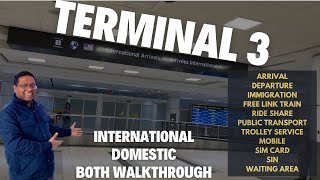 Play video: Toronto Pearson Terminal 3: airport guide
 Toronto Pearson Terminal 3: airport guide
-
 Play video: Why many Indians prefer to stay in this city in Canada
 Why many Indians prefer to stay in this city in Canada
-
 Play video: How to get a PRESTO card for GO, TTC and MiWay
 How to get a PRESTO card for GO, TTC and MiWay
First days: SIM card, bank account and SIN
Quick answer
Get a prepaid SIM, open a bank account and get your SIN, in that order. You can open a bank account with just your CoPR.
Read the full details
SIM card: go with a prepaid plan (we used Chatr): no contract and no credit check. Skip the airport and buy one at any mall near where you stay. Prepaid plans don’t need ID or proof of address, so don’t give any. In our case, a $30-plus-tax plan gave us 15 GB, plus 5 GB extra a month once we set up auto payment. A postpaid plan involves a credit check, so wait until you’re settled.
Bank account: your first priority. You can walk into any bank and open an account with your CoPR, and add your SIN later. Banks need an email and a phone number, and an address for mail, which can be your Airbnb.
SIN: Service Canada has offered in-person SIN services at Toronto Pearson (look for its counter after landing). You can also apply online, where a complete application is processed within 5 business days, or at a Service Canada Centre. As a permanent resident, your CoPR works as proof within one year of becoming a PR (Service Canada).
Choosing a bank: the five big banks (RBC, TD, Scotiabank, CIBC and BMO) all offer newcomer packages, often with a free chequing account for the first year or two. Offers change, so compare when you land rather than signing up from India. Visit each, compare fees and credit limits, and don’t feel pressured into extra products. Ask for the highest credit limit they’ll give you, and set the card on auto payment.
Your first months
Driver’s licence, credit and benefits
Quick answer
You can drive on your foreign licence for 60 days after becoming an Ontario resident; then you need an Ontario licence. Start building credit with a card you pay in full, and apply for the Canada Groceries and Essentials Benefit (and child benefits) as soon as you arrive.
Read the full details
Driver’s licence: new residents can use a valid foreign licence for 60 days, then must apply for an Ontario licence. India doesn’t have a licence exchange agreement with Ontario, and since July 1, 2026, drivers from such countries can get at most 12 months of verified foreign driving experience credit and must pass the G2 road test, then the G road test at least 12 months later. Licences and authentication letters must be in English or French or translated by an MTO-recognized translator. Road tests book up, so start early (DriveTest).
Building credit from zero: your Indian credit history doesn’t come with you. Get a credit card early (from your bank’s newcomer package, or a secured card), use a small part of the limit, set up auto payment and pay the full balance every month. You can check your credit report free with Equifax Canada and TransUnion Canada after a few months.
Benefits: you can apply for benefit and credit payments as soon as you arrive, without waiting for your first tax return. The GST/HST credit is now called the Canada Groceries and Essentials Benefit (CGEB). Without children, apply online with Form RC151; with children, the CRA’s newcomer page explains which forms to use (RC151 and RC66 for the Canada child benefit). To keep getting payments, you (and your spouse) file taxes every year, even with no income (CRA: newcomers).
Job search and career
Quick answer
Start networking before you land, explain your global experience with concrete results, and research salary ranges so you don’t settle for less. Check where the jobs in your field actually are before choosing where to live.
Read the full details
Toronto or Mississauga? Many office-based roles are in Toronto, especially downtown. But Mississauga isn’t just a suburb: the City says it’s home to more than 670 multinational head offices and over 75 Fortune 500 firms. If you lean towards Toronto, an Airbnb near TTC Line 2 (Kipling to Kennedy) makes commuting at short notice easy; that’s what we did before work took us to Mississauga.
“No Canadian experience”: some employers still ask for it. The Ontario Human Rights Commission says a strict requirement for Canadian experience is discrimination on its face (OHRC policy). Since January 1, 2026, Ontario employers with 25 or more employees can’t require Canadian experience in publicly advertised job postings or application forms. Position your experience well: the tools you used, the results you delivered, and the size of teams and clients.
Salary: since January 1, 2026, those Ontario employers must also include the expected pay or a pay range in public job postings, a good starting point for knowing your worth. Ontario hasn’t banned questions about your previous pay, so you may still be asked.
Your approach: connect with everyone you know before you land (alumni, former colleagues, friends of friends on LinkedIn), and ask for informational chats, not jobs. Once here, meet people over coffee. Hiring is slow, and December holidays slow it further.
Free settlement programs: government-funded settlement programs are free for new immigrants and great for orientation and meeting people. ACCES Employment focuses on skilled immigrants. I’m not a big fan of paid programs; the free ones served me well. For the job itself, networking takes you much further.
Regulated professions (for example healthcare, engineering, law, accounting, teaching) need a licence from your provincial regulator, which can take years. Many regulators let you start your credential assessment before you land. Consider a related role while you work on your licence, and look at Ontario’s bridge training programs.

TFSA, FHSA and RRSP
Quick answer
If you’re eligible, open an FHSA early, because your room only starts the year you open it. Learn the rest in your first month. I invest on my own (DIY).
Read the full details
Your FHSA participation room only starts in the year you open your first FHSA ($8,000 a year, up to $40,000 in your lifetime), so opening one early, even without contributing, builds room for when you buy a home. You need to be a Canadian resident, at least 18 and a first-time home buyer: check eligibility on the CRA’s FHSA page. If you land late in the year and you’re eligible, opening it before December 31 gets you that year’s room.
The rest can wait a month. There’s so much to sort out in your first weeks; you lose nothing by learning about the TFSA and RRSP once you have some breathing room. Don’t commit to anything with a bank under pressure. My step-by-step is in how to start investing in Canada.
This shows how I set things up, not investment advice.
-
 Play video: FHSA: open your account before December 31
 FHSA: open your account before December 31
-
 Play video: Wealthsimple TFSA explained
 Wealthsimple TFSA explained
-
 Play video: Buy US stocks from Canada and save on conversion fees
 Buy US stocks from Canada and save on conversion fees
The platforms I use
These are my referral and affiliate links. If you sign up through them, I may earn a reward (and with referral links, you may get one too), at no extra cost to you. You can always go to the company's website directly instead.
-
Automated/Robo-investing
Wealthsimple: I use Wealthsimple and have made several videos on it. If you use my refer-a-friend link, we both get rewarded when you open an account and deposit $100 within 30 days (check Wealthsimple's current conditions). You can also go to Wealthsimple directly, without this reward.
Visit Wealthsimple (referral link · I use this)
-
Online brokerage
Questrade®: Questrade® is a Canadian online brokerage. If you open a Questwealth Portfolios (managed investing) account through my link, I may earn a commission at no extra cost to you.
Visit Questrade® (affiliate link · I use this)
Questrade® is a registered trademark and/or service mark of Questrade, Inc. Questrade, Inc. is a member of the Canadian Investment Regulatory Organization (CIRO) and a member of the Canadian Investor Protection Fund (CIPF).
Your SIN and common scams
Quick answer
Share your SIN only with your employer, your bank (for registered accounts) and the government. Anyone else asking, especially over the phone, is a red flag.
Read the full details
Your SIN is like a PAN card in India. You’ll share it when opening a registered account (TFSA, RRSP, FHSA), when joining an employer, and for government services and benefits. Don’t give it when buying a SIM card, to a landlord or employer during a viewing or interview, or to anyone asking by phone, email, text or social media.
Common scams targeting newcomers: callers posing as the CRA threatening arrest, as your bank claiming suspicious activity, as phone or internet providers with fake deals, fake “you ordered an iPhone” calls, fake job offers, and anyone promising to send money if you share your SIN or banking details. Legitimate organizations won’t pressure you by phone or send you a link to click. Hang up and call the official number yourself.
Tap water and hair fall
Our experience
We drink tap water straight from the faucet, including our daughter, and have never used a filter. As for hair fall, I’m not sure it’s the water; it may be adjusting to a new climate with less sun. If a shower filter gives you peace of mind, there’s no harm.
More videos that might help
-
 Play video: How to apply for OHIP in Ontario
 How to apply for OHIP in Ontario
-
 Play video: Free online doctor appointments in Ontario
 Free online doctor appointments in Ontario
- Play video: How to get a PRESTO card
How to get a PRESTO card
-
 Play video: Contract vs full-time employment
 Contract vs full-time employment
My family’s experience since 2019, with rules checked on the official pages linked above on October 14, 2026. Not immigration, legal, tax or financial advice: rules and offers change, so confirm with the official sources and a licensed professional for your situation.
Have a question? Ask in the comments on my YouTube videos, where I answer so everyone with the same question can see it. Congratulations on your PR, and all the best with your move!
What next
See my packing list, my Express Entry PR journey, and the 11 money moves I made as a new immigrant.
Spot something outdated? Tell me in the YouTube comments on the related video, or use the contact form.